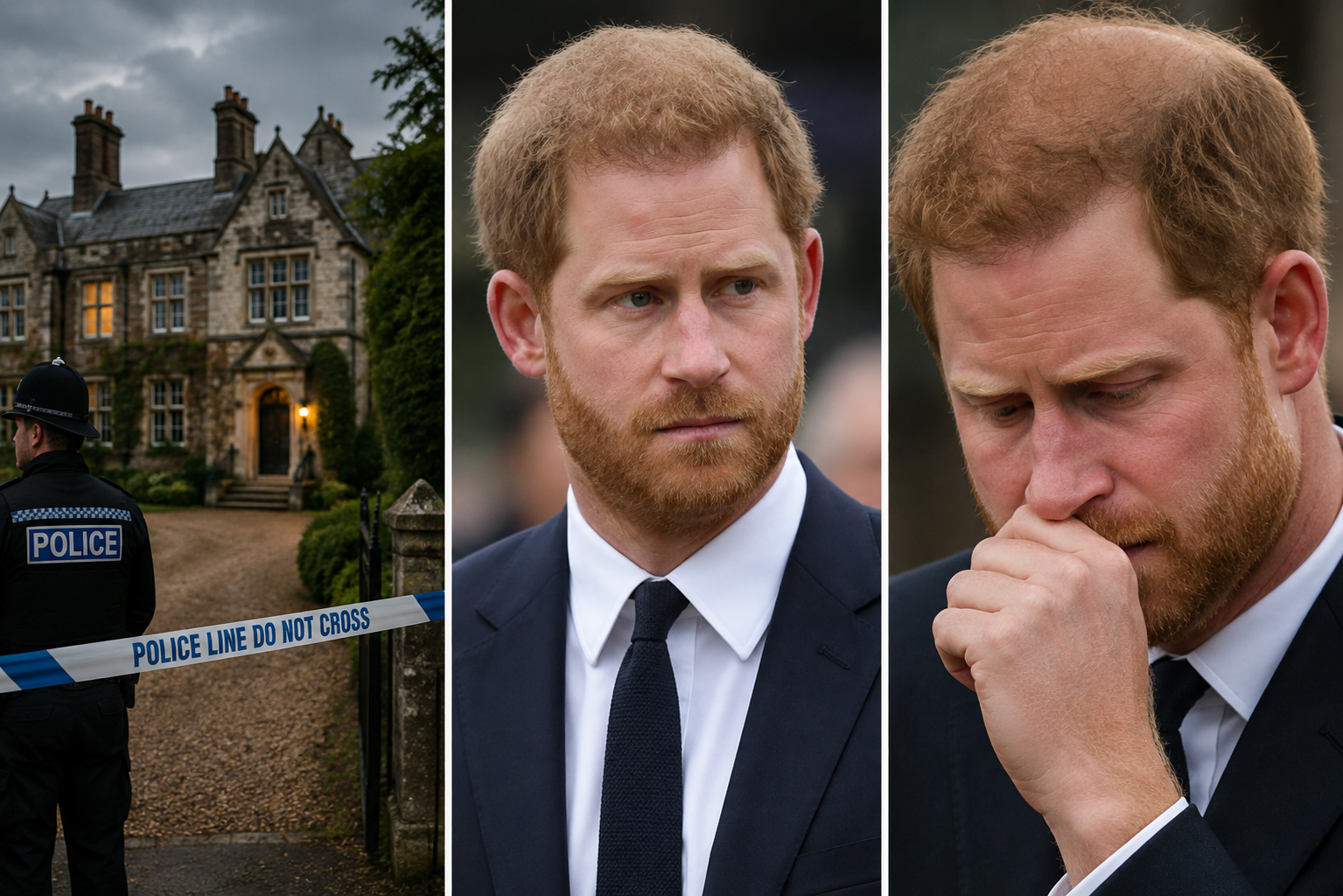
A seemingly ordinary moment at home reportedly ended in tragedy after a person connected to Britain's aristocratic circles suffered a fatal fall while apparently attempting to help a beloved cat.
The story quickly began circulating online.
What made it spread even faster was the addition of a royal connection.
Some online accounts claimed that Prince Harry was among those deeply affected by the death.
But as the story traveled from one website and social-media post to another, an important question remained:
Which details were confirmed, and which had simply been repeated?
An ordinary moment reportedly became an emergency
According to the circulating account, the victim had been attempting to reach or assist a cat when the accident occurred.
The person was reportedly found after falling onto a hard surface.
Emergency assistance was called.
But despite efforts to help, the victim could not be saved.
Police later attended the scene.
Initial information reportedly indicated that the death was being treated as an accident rather than as something suspicious.
Even when there is no suggestion of criminal involvement, sudden deaths still require authorities and medical professionals to document what happened and establish the circumstances carefully.
For relatives and friends, however, those procedural details do little to soften the shock.
A familiar day had changed in a matter of seconds.
The detail involving the cat captured attention
One reason the story attracted so much attention was the unusual circumstance surrounding the accident.
Anyone who has owned a pet knows how quickly instinct can take over when an animal appears frightened, trapped or in danger.
People reach.
They climb.
They attempt to help without necessarily stopping to think about their own safety first.
In most cases, nothing serious happens.
But windows, balconies, unstable surfaces, ladders and significant heights can turn a simple rescue attempt into something dangerous.
The unusual detail may make the story memorable.
It should not, however, become a reason to mock or blame the person involved.
At the center of the account is someone who reportedly tried to help an animal they cared about and suffered a catastrophic accident.
Then came the royal connection
As reports spread, the death became associated with Britain's aristocratic and royal social circles.
Some versions went considerably further.
They claimed that Prince Harry had been left devastated by the news.
That description helped transform what might otherwise have remained a relatively private tragedy into a widely shared story.
But there is an important distinction between a social connection and a confirmed personal reaction.
A person having ties to aristocratic or royal circles does not automatically establish how an individual member of the Royal Family responded privately.
Unless there is a direct statement from Prince Harry, his representatives, the family involved, or another reliable source, descriptions of his emotional response should be treated as reported claims rather than confirmed fact.
Behind the headline is a grieving family
The royal connection may be what attracts attention online.
But it is not necessarily the most important part of what happened.
Sudden deaths create a particular kind of grief.
There is little or no opportunity to prepare.
One moment someone is following an ordinary routine.
The next, relatives may be dealing with emergency responders, police questions, medical procedures and funeral arrangements.
When the person involved has connections to prominent social circles, another burden can arrive almost immediately: public attention.
People begin searching for names.
Photographs circulate.
Old relationships are examined.
And speculation can sometimes begin to look indistinguishable from confirmed information.
For the people actually grieving, none of that changes the reality of the loss.
Why sudden household accidents can be so dangerous
The circumstances described in the story also provide a simple reminder about everyday safety.
When an animal becomes trapped somewhere difficult to reach, especially near a roof, balcony, window or significant height, instinctively attempting a rescue can put the owner in danger too.
Taking a few additional moments to find stable equipment, ask another person for help or contact someone equipped to perform a rescue may prevent one emergency from becoming two.
That does not mean someone who reacts instinctively deserves blame.
Often people take risks precisely because they care.
Viral stories can change as they spread
Stories involving famous people are particularly vulnerable to exaggeration.
A distant family connection can become a “close friend.â€
A private reaction can become “devastated.â€
An unconfirmed rumor can become a headline that appears certain.
Once dozens of websites repeat the same wording, readers may understandably assume that the claim has been independently verified.
But repetition does not necessarily equal confirmation.
That is why it matters to distinguish clearly between what a circulating account says and what has been established through direct or authoritative sources.
What remains uncertain
The story circulating online describes a sudden accidental death involving a beloved pet and someone associated with aristocratic circles.
It has also been linked in online reports to Prince Harry.
What should not be done is fill missing pieces with assumptions simply because a famous name makes a headline more compelling.
Unless additional verified information emerges, the safest way to understand the story is as a tragic accident that left a private circle of relatives and friends mourning.
Whether Prince Harry's personal response was exactly as dramatic as some online headlines suggest remains less certain.
And perhaps that is not the part of the story that matters most.
Behind every viral headline is a real loss
Royal names and unusual circumstances can make a story travel quickly.
But behind the headline is something painfully ordinary.
Someone was there one moment.
Then suddenly, they were not.
And the people who cared about them were left trying to understand how an everyday moment could change so much, so quickly.