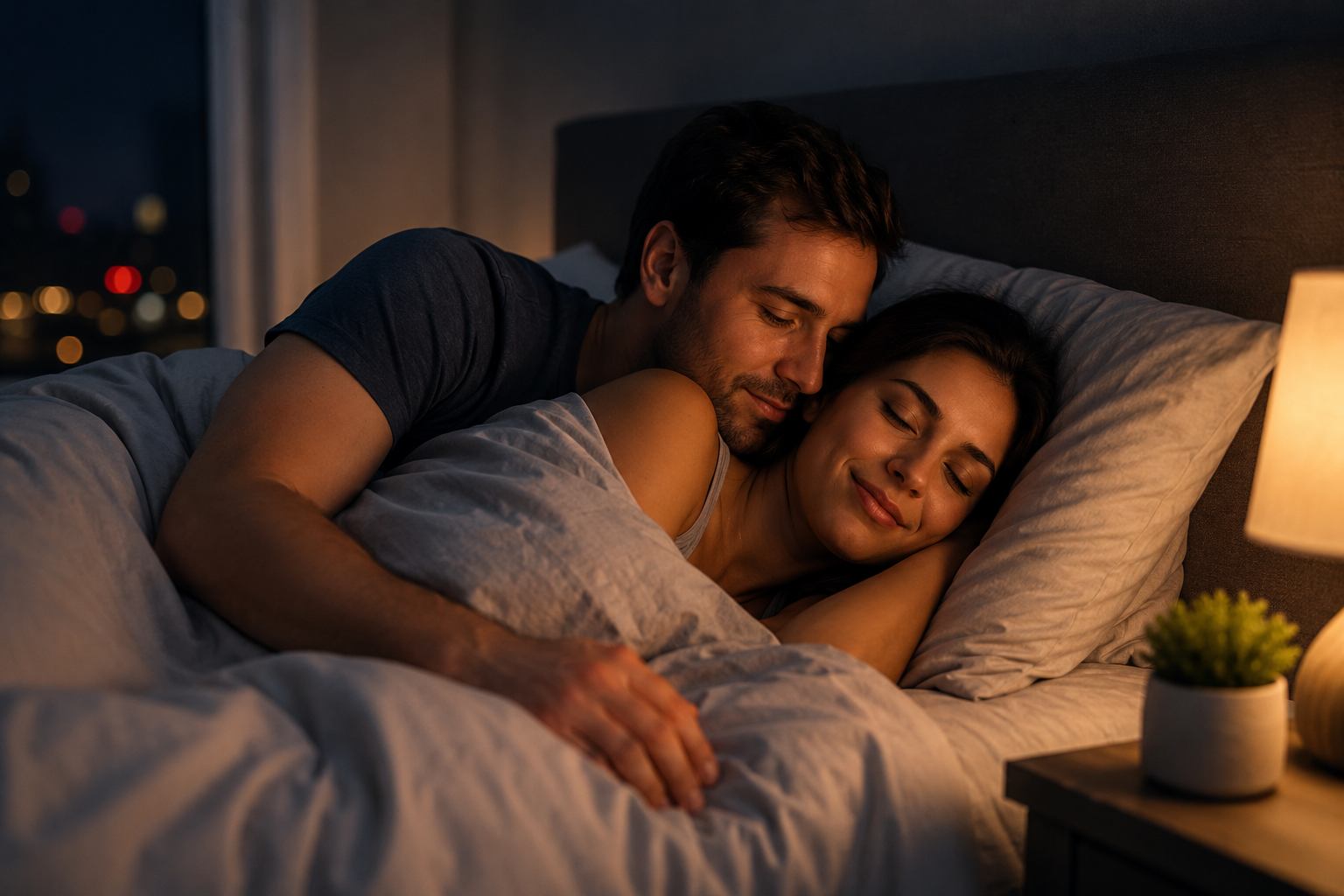
For many couples, nighttime intimacy is simply convenient.
The day is over, the lights are dim, and bed is already right there.
But researchers have also asked a surprisingly interesting question:
What actually happens to your body when you have sex before going to sleep?
The answer isn't as simple as saying that sex automatically makes everyone sleep better.
Still, research has found several interesting patterns.
1. Your heart rate rises first
Sex is physical activity.
During sexual arousal, your heart rate and breathing typically increase and your body moves into a more activated state.
So immediately during sex, your body isn't exactly preparing for sleep.
But after sexual activity ends, that physical activation begins to decrease.
That's when the sleepy part can begin.
2. Your body may feel much more relaxed afterward
Many people describe feeling calm, heavy or sleepy after sex.
One possible reason is that sexual activity and orgasm are associated with changes in several hormones and brain chemicals.
Researchers frequently discuss oxytocin and prolactin as possible contributors to the relaxed feeling some people experience afterward.
That doesn't mean everyone will immediately fall asleep.
But relaxation after intimacy is certainly not unusual.
3. Some people say they fall asleep faster
This is where the research becomes particularly interesting.
A 2019 study surveyed hundreds of adults about sexual activity before sleep and what they felt happened afterward.
Among respondents reporting partnered sex involving orgasm, 62.5% said they perceived an improvement in how quickly they fell asleep.
In other words, a substantial number of people felt that sleep came more easily afterward.
However, this was based on people's perceptions.
It does not prove that sex directly caused faster sleep.
4. Orgasm may make a difference
The research suggests that orgasm may be one of the more important pieces.
In the same study, 70.8% of respondents who reported orgasm with a partner before bed said they perceived better sleep quality afterward.
Researchers have suggested that hormone changes after orgasm may help explain why some people become sleepy or deeply relaxed.
Again, this doesn't turn orgasm into a treatment for insomnia.
It simply suggests that the body's response after orgasm may interact with sleep in interesting ways.
5. Later research found a similar pattern
A later diary study looked at sexual activity and sleep across multiple days.
Participants reported what happened during the evening and how they slept afterward.
Partnered sex involving orgasm was associated with shorter reported sleep latency and better reported sleep quality.
Sexual activity without orgasm did not show the same significant association in that portion of the research.
That makes orgasm one of the more interesting areas for future research into sex and sleep.
6. It doesn't guarantee a perfect night of sleep
This is where clickbait headlines often go too far.
Sex before bed does not guarantee eight hours of perfect sleep.
Your sleep can be influenced by many other things:
stress, caffeine, alcohol, medications, pain, room temperature, anxiety, work schedules and sleep disorders.
Sexual experiences also differ from person to person.
One person may feel completely relaxed afterward.
Someone else may feel more awake.
Both reactions can happen.
7. It may become part of your bedtime routine
Human bodies respond strongly to routines.
Reading before bed, dimming the lights, taking a warm shower or listening to quiet music can all become signals that bedtime is approaching.
For some couples, comfortable and consensual intimacy can become another part of that routine.
Over time, the body may simply begin associating that sequence of events with winding down for the night.
But there is no requirement that sex be part of a healthy sleep routine.
In one survey, 70.8% of respondents who reported orgasm with a partner before sleep said they perceived better sleep quality afterward.
Interesting? Definitely. Proof that sex causes better sleep? Not quite.
Does sex reduce stress before bed?
It may for some people.
Sexual intimacy can be emotionally relaxing as well as physically pleasurable.
For people in comfortable relationships, closeness itself may help reduce tension at the end of the day.
That said, intimacy that feels pressured, uncomfortable or stressful is unlikely to have the same relaxing effect.
Is nighttime the best time to have sex?
Not necessarily.
There is no universal hour when sex suddenly becomes healthier.
Night simply works well for many people because work is finished, privacy is easier to find and sleep usually comes afterward anyway.
Morning, afternoon or another time can be just as normal.
What if you still can't sleep?
Sex shouldn't be treated as a medical solution for persistent insomnia.
If you frequently struggle to fall asleep, wake repeatedly during the night, snore loudly, experience breathing pauses during sleep or feel excessively tired during the day, consider speaking with a healthcare professional.
Sleep problems can have many causes that have nothing to do with your nighttime routine.
The bottom line
So what happens when you have sex before bed?
Your body first becomes physically activated.
Afterward—particularly following orgasm—changes in the body may contribute to feelings of relaxation and sleepiness.
Research also suggests that partnered sex involving orgasm may be associated with falling asleep sooner and reporting better sleep quality for some people.
But the effect isn't universal.
If nighttime intimacy leaves you relaxed and ready to sleep, you're certainly not the only one.